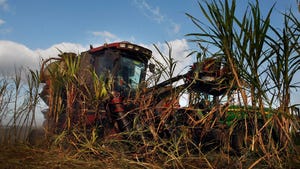
Charitable contributions of grain

If a farmer is charitably minded, this would be a good year to consider making a donation of grain to their favorite church or charity. The tax advantages of donating commodities far outweigh those for a contribution of cash.

Many grain farmers are anticipating unusually high income tax liabilities when they file their 2011 tax return. Even if they did not have a bumper crop, grain prices have been well above normal for the year. If a farmer is charitably minded, this would be a good year to consider making a donation of grain to their favorite church or charity. The tax advantages of donating commodities far outweigh those for a contribution of cash.

A cash donation is made from the sale proceeds of the grain. Therefore, the sale is reported on Schedule F and is included in both taxable income and self-employment income. It is also taxable for state income tax purposes. In order to receive a tax deduction, the donor must itemize their personal deductions on Schedule A. For many taxpayers, the standard deduction is greater than the itemized deduction and, consequently, there is no tax benefit for the contribution. Even if the donor can itemize, they do not get any relief from self-employment tax or state income tax. On the other hand, the donation of grain reduces Schedule F income.

Certain precautions must be taken when making a gift of a commodity. For gifts by farm operators and materially participating landlords, the gifts of crops, livestock, and other items of inventory do not trigger gain when contributed to a charity. While the contribution is limited by the basis in the contributed property, the grain or raised livestock has no basis. All production expenses have been deducted on the Schedule F. It does not matter if the donation is made in the year of production or a later year.

To ensure the farmer gets the desired tax results, he should not simply take the commodity to market and ask the buyer to make the check or partial check payable to the charity. The IRS could take a position that the farmer had constructively received the money and then gave the money as a donation.

He should follow certain steps.

1. Present a letter to the charity telling them he is making a contribution of a commodity. The letter should describe the commodity and the quantity being contributed.

2. The letter should ask the charity where and when they want the commodity delivered. In “IRS speak” the charity must have dominion and control of the commodity.

3. Keep a copy of the letter.

4. Make sure to get a receipt from the charity for the amount of the donation.

5. Do not report the donation on Schedule A. The farmer is not entitled to any additional deduction. The tax benefit comes from deducting the production expenses and not reporting the sale on Schedule F.

The following example illustrates the tax advantage of a charitable gift of grain.

Freddie and Frieda Farmer normally make a $10,000 annual contribution to their church. In 2011, they give the church 2,000 bushels of corn when the market price is $5.00 per bushel.

Assuming the Farmers have not exceeded the maximum self-employment tax limit, they will save 13.3%, or $1,330 of self-employment tax. They will save 25%, or $2,500 of federal income tax and 5%, or $500 of Illinois State income tax. The total tax savings from the gift of the corn is $4,330. If they are able to itemize, the only savings from a $10,000 cash gift would be $2,500. If they are unable to itemize, there would be no savings from a cash gift.

A nonmaterially participating landlord does not have the same tax advantages as a farm operator or materially participating landlord. Instead, they are required to report the value of the commodity as income and then take a deduction on Schedule A.

Discuss this Article 2

nicole
on Sep 4, 2012

I had no idea there are so many small things to be considered when making a donation and applying for a tax deduction. I really hope that I won't have to face anything like this when I'll donate car, but it that will be the case, I'll make sure to be prepared.

mukul
on Apr 11, 2013

This would be a good move for them they would be able to make good use of the grain and they would be able to solve the tax issue and more importantly they would be able to bring smile to faces of needy people. We should feel inspired by philanthropists like John Studzinski.

Post new comment
Sign In or register to use your Farm Industry News ID
(optional)

Newsletter Signup

Search 2.5+ million listings
Continuing Education
New Course

Accredited for 2 hours/CCA Soil & Water credits. The 2,000 member...

This online CE course details sound mechanical irrigation design and management practices to...
Keeping crop protection chemicals on the crop for which they are intended has been a...